


Listen to This Episode
“When Did Ambition Become Embarrassing?“ on:
Artists are told to dream big, but admitting that you want bigger roles, more sales, recognition, money, or opportunity can feel strangely exposing — especially when you haven’t reached it yet.
The Vulnerability of Saying What You Really Want
I want bigger acting roles, stronger representation as a speaker, more book sales, and more speaking opportunities. I want my TEDx talk to do incredibly well. I want more money from my art, a bigger audience, recognition and momentum.
Even writing that list feels a little exposing.
Artists are encouraged to dream big, but there is something different about actually naming the dream. Once you say, “I want this,” you also reveal that you do not have it yet.

If I say I want a major acting role, I am admitting I have not booked that role. If I say I want much bigger book sales, I am revealing that the numbers are not where I would love them to be. If I say I want stronger representation, you now know there is somewhere professionally I still want to go.
That gap between what we want and where we are can carry a surprising amount of shame, particularly when we have been doing this for a long time. Training and experience can actually make the question sharper: Shouldn’t I have got there by now?
That is a very different conversation from whether ambition itself is good or bad.
Tall Poppy Culture Taught Me Not to Get Too Big for My Boots
I grew up Australian, where “tall poppy syndrome” is deeply familiar. There is an instinct to cut someone back down to size if they start appearing too impressed with themselves.
Some of that cultural instinct is refreshing. Australians can be wonderfully unimpressed by status. But there is another side to it: ambition can start feeling embarrassing before you have actually done anything wrong.
Earlier in my life, when I lived in a smaller city, other people described me as ambitious. I did not particularly think of myself that way. I simply wanted more opportunity. I wanted to grow, work professionally and access creative possibilities that were difficult to reach where I was living.
Moving to London changed something for me. Suddenly, I was surrounded by performers who were all going for it. People wanted the West End. They wanted the role. They wanted bigger opportunities and serious careers. Nobody had to pretend otherwise.
There was something freeing about being around people who understood the size of each other’s dreams.
The ambition itself stopped feeling odd. The harder comparison became seeing someone else book the prestigious thing you wanted and wondering why you had not reached it yet.
Gratitude Does Not Require Smaller Dreams
I also think artists can confuse ambition with ingratitude.
I can be grateful for an acting job and still want a bigger acting job. I can be deeply grateful that Audacious Artistry was traditionally published and want far more people to buy it. I can value every speaking opportunity I receive and still want larger rooms. I can appreciate the audience I have now while wanting that audience to grow.
None of those desires automatically cancels gratitude.
Wanting more does not necessarily mean what you have is inadequate. Sometimes you can genuinely appreciate what has already happened while also seeing another level of possibility.
Artists are allowed to have appetite. We are allowed to be curious about what else we could make, achieve, earn or experience.
Pretending otherwise does not automatically make us more humble.
When Faith and Ambition Get Tangled
For me, this conversation also has a faith dimension.
I have spent time in faith-based creative spaces where successful artists describe opportunities by saying things like, “God opened the door,” or “God gave me this platform.” As a person of faith, I have no problem believing that God can be involved in our creative lives.
What concerns me is the conclusion the artist without the opportunity may quietly draw.
If somebody else’s success becomes evidence that God opened a door for them, what does the person whose door remains closed believe about themselves? Were they not faithful enough? Did God not want it for them? Have they somehow failed spiritually as well as professionally?
That is far too simple for the reality of an artistic career.
Humility does not require having no ambition. Faith does not require having no desires. And a lack of professional opportunity is not evidence of a lack of faith.
There are enough difficult variables in an artistic life without turning every career outcome into a spiritual verdict.
Freelance Artists Actually Need Some Ambition
There is also a practical reason I do not want us to shame ambition out of artists.
Freelance creative careers require enormous amounts of self-drive.
We audition, submit, pitch, apply, follow up, train, build relationships, and make things without knowing what will come back. Sometimes we create the opportunity ourselves. There may be no manager standing over us telling us what the next move should be.
That requires desire.
A professional artist usually needs enough ambition to keep moving something forward before there is any guarantee that the effort will pay off.
We need artists who want to improve their craft, make extraordinary things, reach audiences, earn more, lead, perform on bigger stages or create opportunities that do not currently exist.
Ambition can be a creative force.
The problem is not automatically that we want too much. The problem comes when achievement becomes responsible for answering questions it cannot safely answer.
When Achievement Starts Deciding Your Worth
It would be unrealistic to say our careers should have absolutely no effect on how we feel about ourselves.
Of course getting the role feels good. Selling the painting feels good. Seeing somebody buy your book feels good. Being asked to speak again feels good. Recognition feels good.
People in all sorts of professions get satisfaction, purpose, and pride from doing something well. Artists are no different.
The important distinction is between saying:
This achievement means something to me.
and:
This achievement tells me what I am worth.
Those sentences can sit dangerously close together.
A career can contribute to our sense of purpose without being qualified to decide our entire value as a person. Success can matter without becoming our only evidence that we matter.
That distinction is not always clean, and I do not think pretending otherwise helps.
Sometimes “I Don’t Want It Anymore” Is Armour
Perhaps the most painful part of ambition is wanting something for a long time without achieving it.
At the beginning, it may be easy to say, “I am going to do this.” Five, ten or twenty years later, saying the same dream aloud can feel far more vulnerable.
Other people know how long you have been trying.
So sometimes we make the dream smaller.
We decide recognition is meaningless. The industry is ridiculous. Social media is shallow. Money does not matter. We never really wanted the big opportunity anyway.
And sometimes those conclusions are completely genuine. Priorities change. Dreams evolve. We discover that something we once wanted is no longer worth the cost.
But sometimes those conclusions are armour.
Sometimes it hurts less to say we no longer want something than to admit we still want it and it has not happened yet.
Knowing the difference matters.
A Better Question About Artist Ambition
I do not think artists simply need to “be more ambitious,” and I certainly do not think we should chase every visible version of success.
A more useful question is:
Can I tell the truth about what I want without making my current lack of it a verdict on me?
Can I want bigger acting roles without being ashamed that I have not booked them yet? Can I want more people to buy my book without asking sales figures to decide whether writing it mattered? Can I want more money without believing income proves talent? Can I want recognition without expecting recognition to settle every insecurity?
That feels like a healthier kind of ambition.
Not smaller. Just clearer.
Try finishing this sentence for yourself:
If I wasn’t embarrassed to admit it, I would really like…
Maybe it is the lead role, an exhibition, a publishing deal, a sold-out show, stronger representation, a bigger audience, an award or enough creative income to leave another job.
Maybe it is something much quieter.
The point is not whether the ambition sounds impressive. The question is whether it is actually yours.
You can change your mind later. You can decide the cost is too high. You can discover that the dream has changed.
But make that decision honestly, rather than pretending you never wanted something because you were embarrassed that you had not reached it yet.
Go Deeper with Audacious Artistry
If this conversation speaks to something you are navigating, my book Audacious Artistry: Reclaim Your Creative Identity and Thrive in a Saturated World goes deeper into creative identity, ambition, success, comparison, and building an artistic life that belongs to you.
You can also download the free 10-week Audacious Artistry Group Study Guide and walk through the book on your own, with a friend, or with a group of artists.
Find the book and free guide at: https://larabiancapilcher.com/book
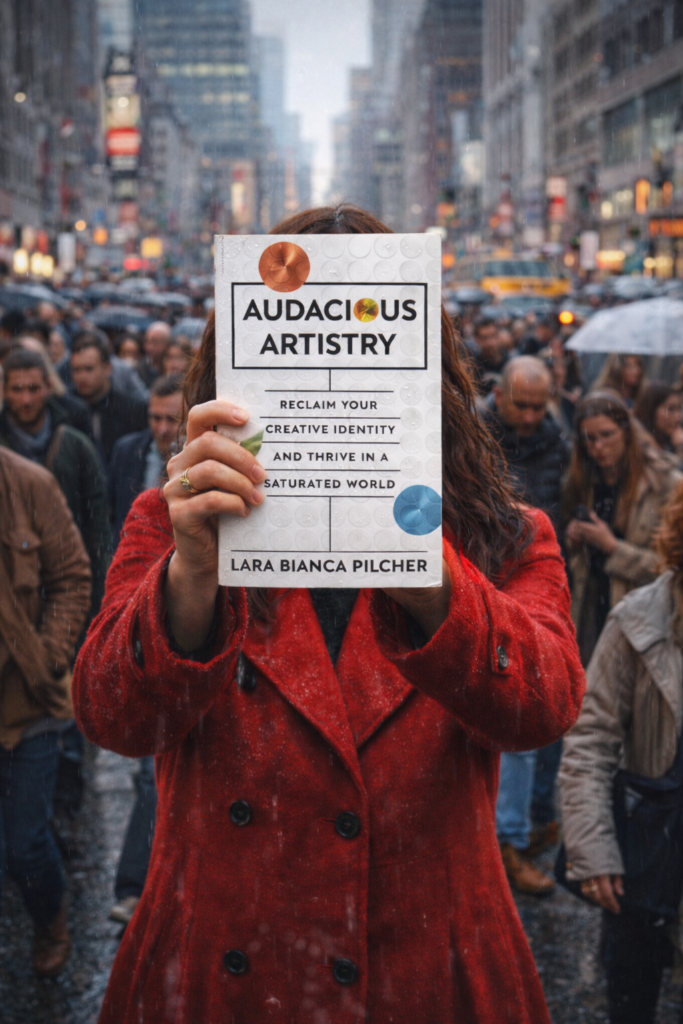
It’s written for artists and creatives who still feel called to create but are tired of proving, comparing, waiting for permission, or wondering if their work still matters.
Read the book + get the free guide:
https://larabiancapilcher.com/book
This article is adapted from the Healthy Wealthy Wise Artist Podcast episode:
Listen to This Episode
“When Did Ambition Become Embarrassing?“ on:
Or visit the podcast page:
https://larabiancapilcher.com/podcast
With you as you keep creating,
— Lara Bianca Pilcher
Connect with Lara
Website:
https://larabiancapilcher.com
Instagram:
https://instagram.com/larabiancapilcher










Build a life of love, purpose, adventure & boundless creativity!