


Listen to: “Why So Many Artists Burn Out (And Why It’s Not a Personal Flaw)” on:
You’re not tired because you’re weak.
You’re tired because you’ve been navigating a system that rarely sustains artists long term.
If you’re a dancer, actor, singer, writer, filmmaker, or visual artist quietly wondering why you can’t “handle more,” this conversation matters.
The Hidden Trap of Artist Burnout
Burnout among artists is often framed as a resilience issue.
If you were stronger, you’d push through. If you were more disciplined, you’d stay consistent. If you were more talented, it wouldn’t feel this hard.
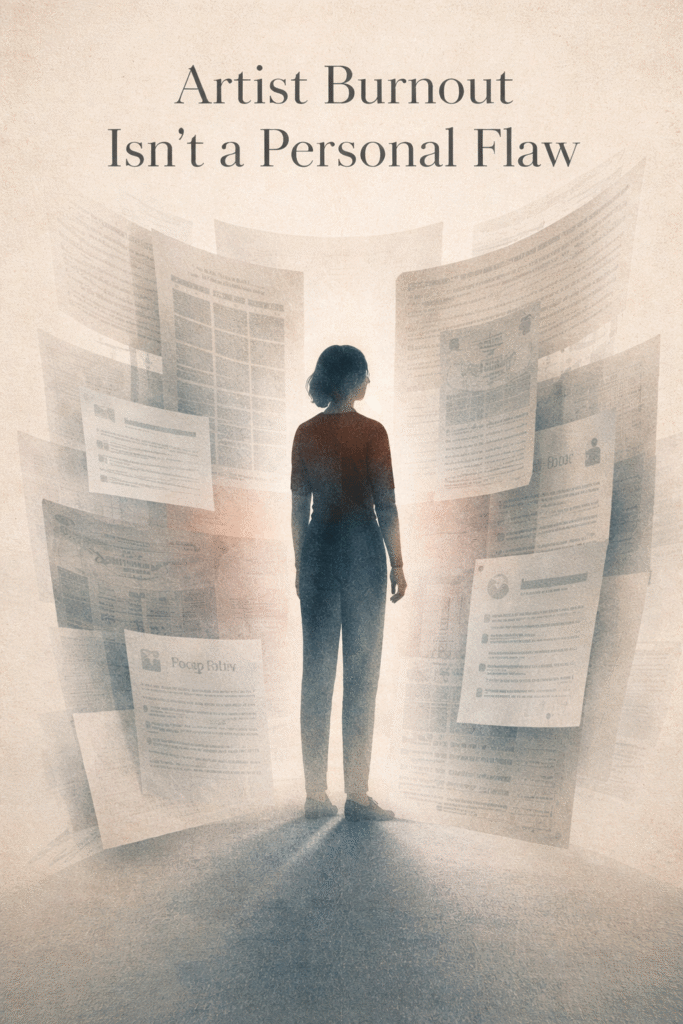
But that framing ignores context.
Artists operate in environments defined by inconsistent income, rejection as routine, oversaturation, and constant visibility pressure. You’re expected to create, promote, network, adapt to algorithms, and remain emotionally open — all at once.
That isn’t a minor load.
Burnout research shows that exhaustion develops when stress is prolonged without sufficient recovery or meaningful reward. For artists, the reward system is unstable. Effort does not reliably equal outcome.
So when you feel depleted, it doesn’t mean you’re not cut out for this.
Burnout isn’t proof you can’t handle art. It’s proof you’ve been handling too much without structural support.
That’s a completely different narrative.
Reframing Burnout Without Shame
Most artists try to fix burnout at the surface level.
They rearrange schedules.
They take a weekend off.
They promise themselves they’ll “be better” next week.
But burnout often has three layers:
- Practical overload (too many commitments, no margins)
- Emotional overload (comparison, evaluation, performance pressure)
- Identity strain (believing your worth rises and falls with output)
If the third layer remains untouched, exhaustion returns.
When your identity is fused to your output, every slow season feels threatening. Every rejection feels existential. Every rest period feels like disappearance.
The shift is subtle but powerful:
Separate identity from momentum.
You can have a quiet month and still be an artist.
You can feel tired and still be committed.
You can rest without narrating collapse.
That steadiness is what builds sustainability.
A Practical Next Step
If burnout has been whispering (or shouting), treat it as information rather than failure.
Ask yourself:
- Where am I chronically overextended?
- What expectations am I carrying that aren’t actually sustainable?
- What would change if I stopped equating rest with weakness?
Burnout doesn’t mean abandon your art.
It may mean adjust the structure surrounding it.
🎁 Free Artist Masterclass: The Artist Momentum Reset
A free 30-minute on-demand video download you watch in your own time.
(No booking. No pressure.)
👉 https://larabiancapilcher.com/masterclass
This Is Part of a Bigger Conversation
This reflection is part of the ongoing Audacious Artistry conversation — the movement to help artists reclaim their creative identity and thrive in a world that often undervalues artists.
About Audacious Artistry
This philosophy — that burnout is often systemic, not moral failure — is something I explore deeply in my upcoming book
Audacious Artistry: Reclaim Your Creative Identity and Thrive in a Saturated World .
👉 https://larabiancapilcher.com/book
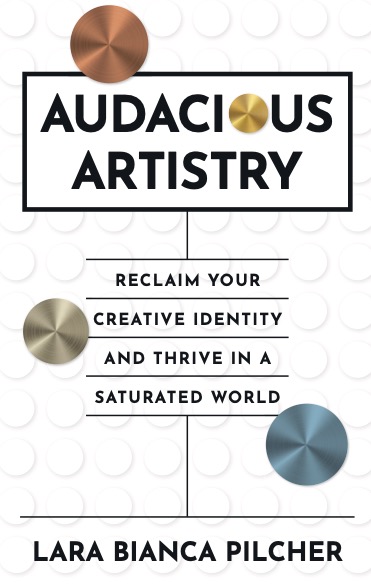
It’s written for dancers, actors, singers, writers, and visual artists who want to build a sustainable creative life rooted in identity and steadiness — not pressure, perfection, or constant performance.
Because thriving as an artist isn’t about endless output — it’s about creating from a grounded sense of worth.
You were made for this.
With you on the journey
— Lara Bianca Pilcher
Listen to: “Why So Many Artists Burn Out (And Why It’s Not a Personal Flaw)” on:
🌿 CONNECT WITH LARA
Website: https://larabiancapilcher.com
Podcast page: https://larabiancapilcher.com/podcast
Instagram: https://instagram.com/larabiancapilcher






Build a life of love, purpose, adventure & boundless creativity!